
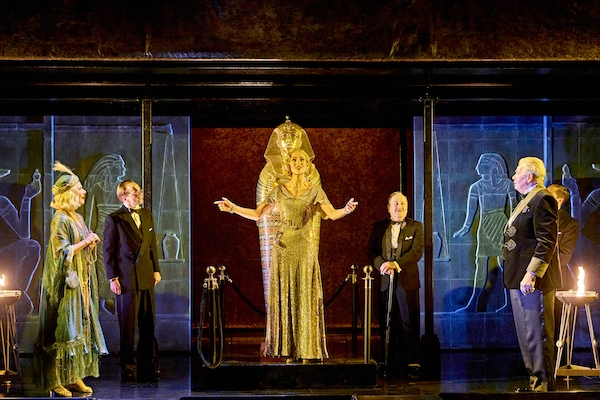
Bitter rivals. Buried secrets. A love to die for.
On board a luxurious cruise under the heat of the Egyptian sun, a couple’s idyllic honeymoon is cut short by a brutal murder. As secrets that have been buried in the sands of time finally resurface, can the world-famous detective, Hercule Poirot, untangle the web of lies and solve another crime?
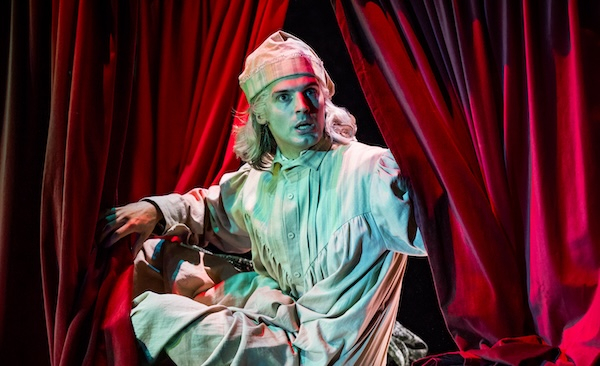
Following the sell-out tour of Murder On The Orient Express, the European premier of this thrilling production reunites writer Ken Ludwig, director Lucy Bailey (Witness For The Prosecution) and Fiery Angel - and it plays at Northampton Derngate from Tuesday, until Saturday (November 4-8).
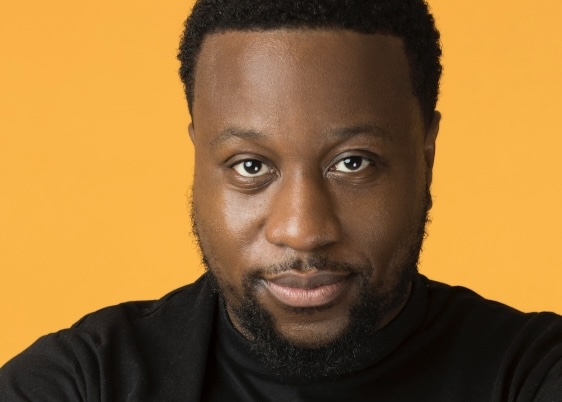
We spoke to actor Max Dinnen about all things theatre, and his role in this Christie classic...
Tell us about your first memory of the theatre
I played a snowman in a nursery school Christmas play when I was about 3 years old. I vaguely remember breaking character to talk to my mum in the audience so clearly I hadn’t yet learned theatre etiquette.
And the moment when you realised the theatre was your calling
It was more of a collection of moments. My introduction to acting was actually through film, stage came later. I didn’t start Drama until I went to secondary school. It then became the only lesson that properly engaged me, and the rest is history.
You've also worked on the small screen - if we pushed you, which would you say you prefer?
That’s very tricky - the honest answer is that I love both and that their differences are what makes them special. They allow for different types of performance; screen smaller and more internalised, stage slightly grander and spacious.
But the camaraderie of theatre is something very wholesome and addictive, which can sometimes be harder to build on screen projects.
Any dreadful calamities, or funny happenings on stage that you would care to share with us?
I’m not sure I’ve ever done a show where something hasn’t gone wrong! It’s part of the joy of live performance. I once played Macbeth, and during a scene where he’s shouting at the Doctor and losing his sanity, I realised after the first monologue that the actor playing the Doctor hadn’t come on, so I’d been delivering the entire speech to no one. Unexpected, but made it look convincingly like I’d lost my marbles.
Which stage actor, living or dead, would you most like to meet, and what question would you ask them?
Another tricky question! I’m always fascinated by how actors like to prepare for rehearsals. What sort of work, research, and exercises they do before they get into the room. So I’d probably ask that.
As for who, maybe I’d go for some of the classics, Gielgud, Ustinov, Olivier etc just to see how much their style differs from today.
Do you have any superstitions, or pre-performance routines?
I’m not a superstitious person, if anything I quite like the danger of tempting fate. However for each show and performance I find a unique routine based on what I need.
Music and meditation are useful tools for calming before a show, and the warm up is a great opportunity to take ownership of the stage. On this show my only routine is at the end of every warm up on stage I shout “BOB BARRETT” three times to the back row of the Upper Circle.
The satisfying plosive consonants in Bob’s name are great for warm ups.
The best piece of advice given to you when you started in the business
Go into auditions with an offer, and have the confidence to back that offer. However, be ready and expect to throw all your prep out of the window and play around with the director’s notes. Be kind to everyone; teams make good theatre, egos make bad theatre.
Never stop learning. Hang up your costume after every show, don’t throw it in a pile for wardrobe to deal with.
What do you think has been your steepest learning curve
The steepest learning curve I’ve found in acting is the industry itself. Everyone drawn to this world and profession comes to it filled with dreams and ideas, and learning how best to navigate the other sides of it takes a lot of trial and error.
It took me years to let go of certain things and find peace in what’s in front of me, but if you love what you do and surround yourself with the best people then you’ll always be pulled back to your centre.
How do you fill your spare time while on tour
Exploring. The most exciting and fortunate part of touring is the ability to spend time in a new place.
Wherever I am I want to make an effort to see a local attraction, eat some good food, and just walk around and soak up the energy of a place and the people that live there.
Nerves or excitement? Which takes over just before the curtain rises?
I’ve always thought of nerves as a form of excitement. Nerves come into it in the days and weeks building up to a performance. Once the curtain goes up all that quietens and I’m left with nothing but excitement to tell a story.
Finally, plug Death on the Nile, and explain the role you play - what can ticket-holders expect?
I’m in the Ensemble who are the ones responsible for bringing to life the world around the central characters.
The set is beautifully designed, and allows a lot of creativity in adapting spaces: we’ll take you straight from the British Museum to the deck of the Karnak in an instant.
I also understudy the roles of Simon Doyle, Colonel Race, and Ramses Praed, which is a big honour and a tremendous joy. Ticket holders can expect mystery, intrigue, a bit of darkness, a touch of mirth, gorgeous costumes, atmospheric sound, a wonderful set, world class actors, and one member of the Ensemble trying not to wave to his mum.
Image: Manuel Harlan